Multimedia Journalist
The Bedouins Desert.
Waking up to a warm breeze with sand blowing gently along the shores of the Inland Sea, Khaled starts his day. Making his way around the tent, he stumbles over a large seashell which seems to have made its way into the kitchen area of his tent.
Khaled, who is a nomadic livestock trader, was born in 1958 in a small rural fishing town called Al Khor. He has been living in the desert for 20 years. His wife and children have moved and settled in the city, but his heart remains in the desert. “I like it here, there is no sound of construction or people, and it's just calm. The only sound you hear are the grains of sand sliding down the dunes” says Khaled, preparing his morning meal of Khobiz Regag (crepe bread) and Chai Karak (cardamom tea) before heading off to the Central Livestock Market in Doha to trade.
Abdullah, a smartly dressed man, comes in, bringing with him some freshly caught snapper, still hanging from the hook and dripping of water for a later meal. Abdullah is Khaled’s assistant and personal driver, who is known by all of Khaled’s friends and family who stay in the desert during the winter months, the man who can do anything. “If you need anything, whether that’s food or ropes to stabilise your tent, he’s your man”, Khaled proudly says.

While sipping his tea and admiring the view of the Inland Sea, which comes into the heart of the sand dunes and separates Qatar and Saudi Arabia, Abdullah tells him that it is time to go. He gets into his traditional attire which consists of a Thawb (a long white shirt) and a Sirwal (loose white trousers) along with a Ghutra (a loose headdress).
He places his briefcase in the back of his four-wheel drive, “Back to the hustle and bustle of the city”, he sighs as he gets into his car. Departing his tent, he sticks his head out of the window to catch the cool breeze of the desert as he leaves. The tangy smell of the sea wafts in, and he exclaims “I’ll never abandon this place; my heart is where the desert is”.
Having two cars on the road in front of us for the first 20 minutes, and then six afterwards, not only helps Khaled avoid the rush hour, but also allows him to reflect on the natural beauty of the desert which occupies some space of 1500 square miles. On his way, he stops by Mesaieed, a nearby petrochemical town to fill his petrol tank for the rest of the 65km journey, only for 70 riyals.
The Central Market, where people come to buy and sell sheep, goats, and camels, is always busy. Sultan works for Khaled and sells his sheep and goats on his behalf. He greets him and directs him to a customer with a large order of 10 sheep.
He also hands him a glass of icy water without spilling a drop while masterfully carrying a baby goat on the other hand. Khaled begins his day. The smell of manure fills the place, and the view from the market opens on Doha’s local mosques and police station, just a regular day at the market for him. “I know people from other countries such as Saudi Arabia and Bahrain who specifically come here, to Qatar, just to buy my sheep and goats, they say the meat of my sheep is delicious, and the milk of my goats fresh” Khaled mentions.

After a five-hour day, Khaled walks around the corner to a small but rather busy cafe to have some Masala tea and Mamoul (date filled cookies). Yellow tiles dominate the place, and steam continually rises from teapots. Six silver tables are aligned together with jugs of icy water on each. Servers walk in and out as horns continually honk and cars keep coming. “It’s always busy from morning till night” Khaled states.
The stress of market negotiations and the unbearable heat, which reaches 39 degrees in the winter factors into the quietness of this cafe as everyone just sits in silence while drinking their teas and having their biscuits. “I have been coming here for 20 years, everyone in this cafeteria knows me, and they sometimes give me the tea and biscuits for free” exclaims Khaled.
He then walks back to the wooded enclosure where his sheep and goats are permanently housed and hands Sultan his monthly salary. Khaled then walks through the sand and blood of slaughtered animals from the nearby slaughterhouse and meets other traders, conversates with them for a few minutes, before heading back to his car.

“Let’s head back to the family home and see how everyone is doing,” says Khaled as we pass through rows of residential streets and gardens. As we are driven along, we stop at this traffic signal known as the crazy signal by the locals as it’s always jam-packed with cars. Khaled angrily exclaims “this is why I hate the city but don’t get me wrong, I’m proud of our gleaming and very modern capital, but I just can’t stand this congestion whether it is cars or people”.
It’s now late in the afternoon, schools have just finished, and people have just left work. Luckily, we only managed to avoid the afternoon rush and arrive at this rather grand villa which has a modern design and everywhere you look, palm trees are prevalent.

We are taken inside by Khaled and are met by his three eldest sons out of five who serve us Arabian coffee and ripe dates on exquisite glassware while fragrant incense woodchips burn in the background filling the air with a rosy scent.
Khaled’s wife, Maryam, says she prefers the city to the desert and his oldest son Ahmed, stated that “all my friends are here in the city and I also work here, so the desert isn’t right for me, but I do like to go there from time to time”.
Khaled visits the family home every week, “I stay here often, so my children don’t feel isolated from their father, but I can’t permanently leave the desert as I want to preserve this way of life and I like to be alone sometimes” Khaled explains.
A little later we are served a traditional Qatari dish, Harees, which consists of beaten ground wheat and lamb. Succulent lamb and boiled wheat soften in your mouth as you eat it.
Another dish that was present was Kabsa, which is rice cooked with a variety of spices and either meat, chicken or fish. Khaled mentioned to us that “if you never tried these foods, you can’t say you visited Qatar” he joked.
Two hours away from the sunset, Khaled says we should get back to the desert as cultural events await us there. As it is a Thursday evening, which is the start of the weekend, families and friends gather in the desert in their tents and camps which are scattered all over the desert to maintain privacy.
People engage in activities such as dune bashing and water sports. We arrive back at Khaled’s tent and Abdullah, who’s been driving since the morning and looks visibly tired goes to bed.
However, Khaled says “it is time to start the night and head over to my friend's majlis” which is the Arabian equivalent of a living area. We meet several of Khaled’s friends and relatives and are embraced by traditional folk music from Ouds (Arabian guitar) and percussion instruments. It's not like a regular living area; here you have people eating, conversating, and sleeping. This majlis also has an oversized TV screen which sits in the open air.
Yes, birds fly over and sometimes desert foxes approach, but the main attraction is the Falcons who sit on stools with their eyes blindfolded. “Falconry is a national sport here, and we consider it part of our culture and identity, so it is crucial for us to care about our falcons,” said Khaled confidently.
They care so much that there is even a falcon hospital in Doha. One falcon named Sareeh, which is Arabic for speed is the most celebrated with 20 kills of hunting prey such as birds and rabbits. Khaled proclaims that “some of these falcons can sell for 100,000 to 400,000 riyals at auction and people actually pay”.


We lay there in the open-air tent on a warm yet breezy night with stars all around us, occasionally joining in the singing of classical songs. After being served some green tea and constantly spitting out sunflower seeds, it was time to go back to Khaled’s tent. We get back to Khaled’s tent, and all go to sleep.
The next day, we wake up to the scent of baid o tomate (eggs and tomato) being cooked by Abdullah over an open fire. Khaled, however, opts for some balaleet (sweet vermicelli and eggs).
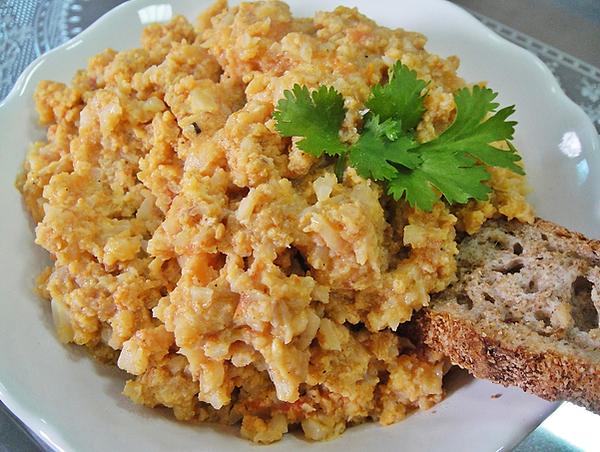
After we finished breakfast, Khaled tells us quite excitedly, that “we have a lot of things to do today”. We walk one kilometre to a nearby camp full of camels. We meet some Bedouin guides who help us onto the camels and give us a 20-minute ride next to the beach.
Children and adults alike gather around just to have a ride on those camels. “This one is called Al Aklu, it’s my youngest son’s favourite one,” says Khaled while patting the biggest camel in the camp. It usually costs £20, but as we were guests of Khaled, it was complimentary.
The ride was mesmerising, to say the least, camel’s footsteps lay behind as we ride by the turquoise water. The beach livens up with all the voices and energy of visitors and children. “people come here to relax and unwind” says one of the Bedouin guides.

After the ride, we return to the tent to see that Abdullah has prepared a Machboos which is a similar dish to Kabsa using the snapper he caught the other day. Seasoned and spiced snapper lays upon a bed of herbed rice and pine nuts. Piping hot and ready to eat, Khaled says “the slow-cooked dish makes it worth the wait, it's unbelievably scrumptious”. With our bellies full, we are served some black tea to conclude the meal with, and a customary nap is observed.

Approximately two hours later, we are awoken by the rumbling sound of hundreds of cars and quad bikes. “They have come for the dunes” Khaled shouted, as they pass around us.
A little later, Abdullah says we are going dune bashing with Khaled’s friends. We get inside the four-wheel drive car waiting for us outside and head off. We gradually start speeding, and in one moment we are climbing a dune and the other we are going down it with sand spraying against the window as we are close to flipping.
Gears shifting, engines revving and wheels drifting, it’s exhilarating and terrifying at the same time. “It’s a substantially risky activity, and I have seen many accidents, you just have to be a professional driver who knows how to navigate the dunes” mentions Abdullah.

Before long, time is up, and we were taking the winding drive back to the tent. Once we get back, we graciously thank Khaled for providing us with this opportunity to have an insight into his life and how much the desert means to him.
We also thank Abdullah for the considerable help and the great cook he has been. As we depart for Doha, Khaled and Abdullah both shout out “you’re always welcome to come back”. Their smiles, their faces, their hospitality made us feel at home, in the Qatari desert. It was a perplexing few days, I know, I was there.